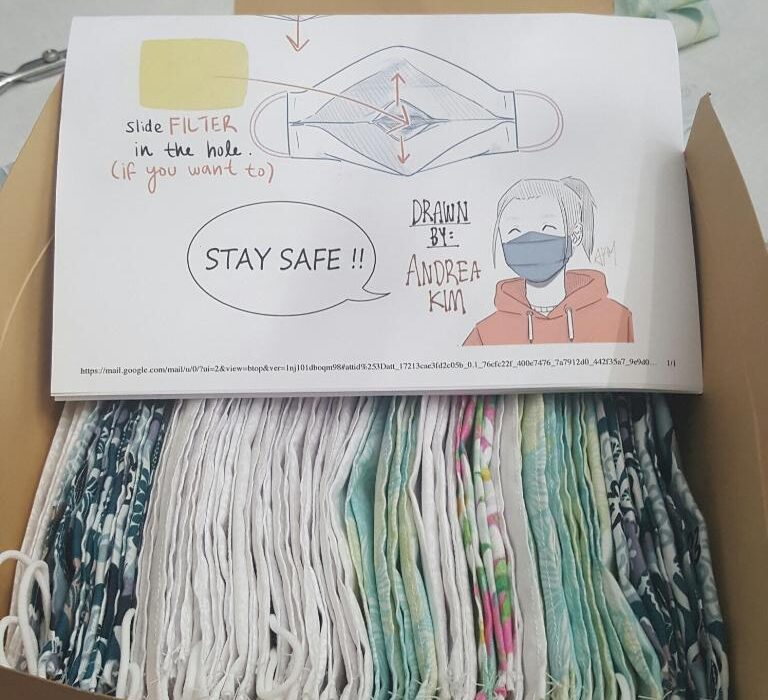
Within the past few months, my team and I have made tremendous progress on donating masks. In one week, our weekly output shot up from only 300 masks to nearly 600 masks every week. More volunteers seem to flood in and our project has spread to an astounding amount of students. It is shocking yet exhilarating to see how one idea can incite actual change to hospitals and detention centers.
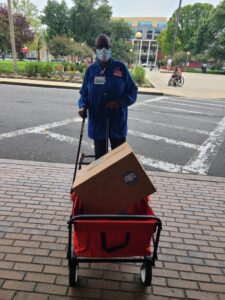
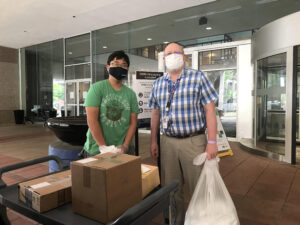
Even so, every week feels like a new challenge. Last week we had three drop offs to facilities. Our usual Friday drop off to the Doctor’s Community Hospital, the Veteran’s Affairs Center in Baltimore, and a new facility — the Howard University Hospital in DC.
It is always difficult to maximize output every week, especially weeks that have more than one facility to donate to. We actually had one fumble with the Veteran’s Affairs Center this week. Typically, we are able to donate every two weeks on Fridays in the morning. However, early Friday morning on the day of the drop off, the director of the VA Center alerted me that the nurse scheduled to pick up the masks was ill and hospitalized. The sudden break in our consistent schedule caused momentary chaos within our group. Thankfully, the situation was quickly alleviated and we were able to donate the following week. Small experiences like these remind me that even with sudden shifts, our volunteers are cooperative and willing to reschedule their own times to ensure hospitals are getting what they need.
Yet, these delivery experiences make all our efforts worthwhile. More than any other part of the mask making process, meeting the nurses who pick up masks is the most rewarding. To hear their stories and backgrounds, along with hearing a personal thank you is something that cannot be replicated. Although each week seems to have its own set of obstacles, the final drop off is so heartwarming that it reignites my motivation to keep donating.
I also began to shoot a new video for my team’s Kickstarter. Above everything else, shooting videos are by far the longest days. Recording scenes again and again, focusing on the background set up, and getting the message across are all hard to express in a limited amount of time. For this video, our team wanted to create a new stretch goal of 20,000 dollars to establish ourselves as a charity organization. While this is a very ambitious goal, we decided that we wanted to continue producing masks even throughout the school year and possibly the next year as well. Establishing ourselves as a charity would reduce the amount of pressure on all volunteers and allow us to balance our workload between the school year or among other extra-curricular activities.
The dedication to our project is something that I recognize time and time again. At our fourth biweekly Zoom Meeting, I asked volunteers if they would be willing to make a different style of masks for inmates. These masks happen to be more difficult to make than the previous type of mask design. Despite this, four students immediately pitch in their help. Our team dynamic is coming to life! More volunteers are opening up to me about how they feel about our project and it’s uplifting to listen to their personal aspirations for the team.
July 14, 2020